
Innovation Underfoot: The Rise of Soy-Backed Turf in Modern Golf
Over the past decade, technology and performance needs have reshaped the golf industry, expanding the game well beyond traditional fairways. Off-course entertainment venues, launch monitors, and immersive golf experiences have accelerated demand for the game while placing new demands on playing surfaces. The fusion of sustainable surfaces with new business models is now driving the golf industry.
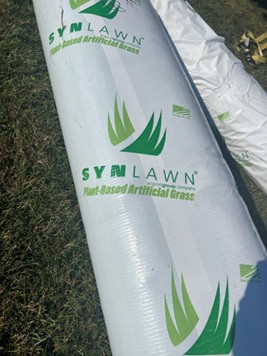
A roll of SYNLawn turf featuring soy-backed technology, packaged and prepared for delivery
The search for lower-maintenance landscapes as well as meeting water-use restrictions and sustainability goals is reshaping how developers, municipalities, and golf facilities think about turf. Across the country, and increasingly around the world, artificial turf is gaining momentum as a water-wise solution that also decreases use of fertilizers, pesticides and energy-and-labor-intensive mowing. From Utah to London to Mexico, SYNLawn’s unique soy-backing system is creating a new use for U.S. farmers inside renewable plant-based materials.
SYNLawn Senior Director of Sales Rob Dant notes that the company has invested in using U.S. soybean-oil technology in its backing systems since 2012 to continually find ways to make their products perform better and last longer. “We’re in a unique industry and recognize the global importance of sustainable solutions. Our investment is a commitment to technology and partnerships that improves lives, properties and programs,” says Dant.
“SYNLawn’s use of U.S. soybean oil boosts the U.S. economy as it offers an exciting new use for our soybean oil that we grow in abundance,” said USB Chairman Brent Gatton, a Kentucky soybean farmer. “As a father of three active boys, I have seen how well this soy-backed product performs in our own backyard golf installation, and I love not having to mow and water it.”
Renewable Materials Delivering High Performance
SYNLawn manufactures its soy-backed grass in northwest Georgia and uses independent labs to certify that its products are made without Per- and polyfluoroalkyl substances (PFAS). Thanks to SYNLawn’s use of plant-based materials, the United States Department of Agriculture (USDA) has granted USDA Certified Biobased Product designations to the company. SYNLawn is proud to be the only brand with 11 USDA-certified systems. Their soy-biobased backing allows turf systems to perform under pressure while aligning with renewable-material standards adopted by resorts, architects, and public agencies.
The shift is especially visible in golf, where high water use and strict performance expectations have traditionally created challenges for natural grass. Today, soy-backed turf is appearing in both indoor and outdoor golf environments, demonstrating that sustainable materials can deliver the consistency and precision players expect.
At the Tomorrow’s Golf League (TGL) in Palm Beach, Florida, precision-engineered surfaces built with soy-backed technology support the controlled competitive environment required for the league’s matches. These surfaces are designed for true roll, consistent speed, and reliable durability, showing how renewable materials can power high-performance sports settings. The playing surfaces must meet elite-level performance measures.

Soy-backed artificial grass at the SoFi Center, where TGL competes in Palm Beach, Florida. The TGL Finals begin March 23rd. Photo credit: SYNLAWN
Proving Value in Water-Limited Resort Environments
The same benefits are transforming outdoor destinations like Black Desert Resort in Ivins, Utah, where water limitations have long shaped landscaping decisions. Designed by the late golf legend Tom Weiskopf, the resort sought a solution that balanced visual appeal with regional water-wise standards. Soy-backed turf, initially installed in two small test areas in 2024, quickly proved its value. Its strong drainage, UV stability in harsh desert climates, year-round greenery, and reduced maintenance demands led the team to expand its use to more than 27,000 square feet across rooftops, courtyards, and high-traffic gathering areas.

SYNLawn being installed in a multi-purpose event space at the Black Desert Resort in Utah
For Laurie Weiskopf, who has played a key role in advancing the resort’s vision, the choice also held personal meaning. Her brother is a Minnesota soybean farmer, making the use of materials supported by U.S. soybeans both fitting and significant. The installation is expected to pay for itself through reductions in irrigation, mowing, fertilizing, and seasonal upkeep.
This trend is not limited to the United States. Facilities around the world are adopting water-saving turf solutions as climate pressures and sustainability requirements intensify. Golf properties in Mexico City, where water availability is increasingly strained, and London, where consistent greenery and reduced maintenance costs are driving demand, are incorporating SYNLawn systems into practice areas, short-game zones, and high-traffic landscapes. These installations reflect a global pattern: courses and developments seeking durable, low-water surfaces that still deliver performance and aesthetic quality.
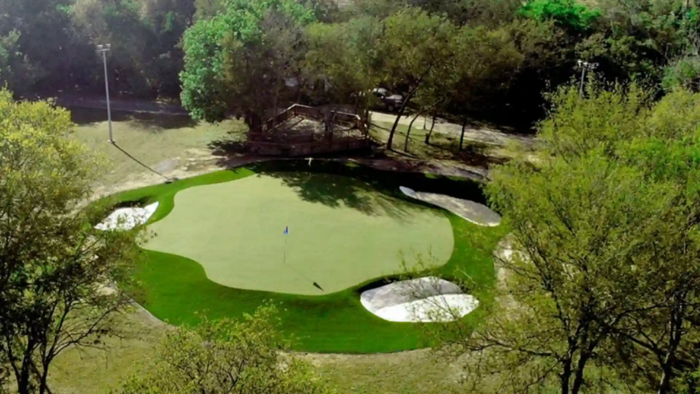
SYNLawn Installation at Monterrey, Nuevo León, México. Across the country, and increasingly around the world, artificial turf is gaining momentum as a water-wise solution that also decreases use of fertilizers, pesticides and energy-and-labor-intensive mowing.
As water conservation continues to propel market growth, artificial turf is also expanding into rooftops, balconies, indoor commercial spaces, event venues, pet facilities, and municipal parks. These applications mirror broader market trends identified in industry research (Markets and Markets, 2018): organizations are seeking green spaces that offer visual appeal without heavy water use or chemical inputs, aligning with long-term sustainability and resource-management goals.
Advancing Through Innovation
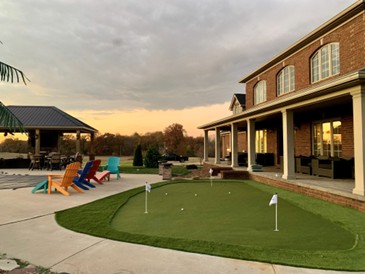
United Soybean Board Chair and Kentucky soybean farmer, Brent Gatton’s residence. Brent had SYNLawn installed after witnessing the benefits of SYNLawn in California installations.
Challenges remain, including heat retention on hot days and higher upfront installation costs, but manufacturers are advancing cooling technologies, improved materials, and alternative construction methods to address them. Importantly, long-term savings in water and maintenance often offset initial installation expenses, making sustainable turf increasingly appealing for both private and public developers.
From high-tech professional golf environments to drought-prone resort landscapes soy-backed turf is showing that sustainability and performance can advance together. As communities push toward stronger water conservation and reduced petroleum use, systems supported by U.S. soybeans are helping shape a more resilient future for golf, recreation, and landscape design, proving that innovation, renewable materials, and responsible resource use can go hand in hand.
And as you tune in to watch the TGL Final later this March, there’s even more to celebrate. March 8 is National Biobased Products Day, a fitting reminder of how biobased innovation, like soy-based materials, is showing up on major stages and driving real progress in sustainability.
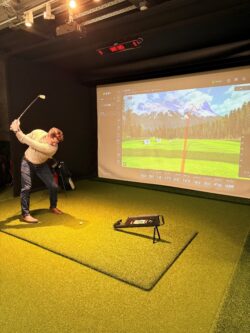
The SYNLawn practice green at Iowa Soybean Association headquarters in Ankeny, installed by SYNLawn Iowa/Mid-America Sports. A popular feature for ISA as they host international trade teams and visitors from around the world. Photo credit: Iowa Soybean Association