
A soybean oil-based asphalt technology from SoyLei Innovations has achieved a significant industry milestone, earning recognition through the American Association of State Highway and Transportation Officials (AASHTO) Asphalt Mixture Recycling Agent (AMRA) evaluation pathway. The successful completion of the AASHTO AMRA pathway represents an important step toward broader use of these commercially available products that have also won praise from engineers using them in the field.

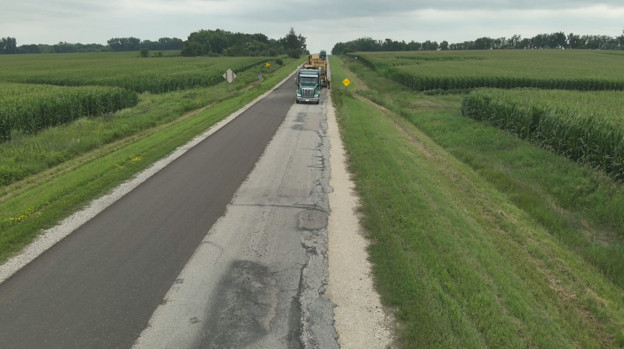
SoyLei’s soybean oil-based asphalt rejuvenator being applied during a Fayette County, Iowa, roadway project. Photos courtesy of Fayette County.
SoyLei’s SIP-1111™ Rejuv, a rejuvenator made from partially epoxidized soybean oil, commonly known as sub-epoxidized soybean oil (SESO), has completed the AASHTO AMRA process and now has an official AASHTO DataMine report. The report lists SIP-1111™ Rejuv, SIP-1111™P and SIP-1111™-1 under designation AMRA-2025-02-003. It is designated as 100% biobased under the U.S. Department of Agriculture’s BioPreferred Program.
“The quality has been excellent, and these projects appear to be some of the best hot mix asphalt roads we’ve ever constructed in Fayette County,” said Joel Fantz, Fayette County Engineer. “The application was also cost competitive, demonstrating that soybean-based technology can deliver strong performance without adding unnecessary cost to a pavement project. The resulting specifications can serve as a template for future projects and help other agencies confidently adopt this technology.”
The AASHTO AMRA pathway provides transportation agencies with standardized performance data for asphalt recycling agents. Inclusion in the AASHTO DataMine database gives state departments of transportation and pavement engineers access to independently evaluated product information, helping increase confidence in innovative materials and supporting broader adoption. The technology provides a data-backed path to higher reclaimed asphalt pavement (RAP) content and broader binder-grade flexibility while maintaining or exceeding strict performance standards.
SoyLei’s technology has already demonstrated its value in commercial-scale projects. Fayette County and Clayton County, Iowa, partnered with SoyLei Innovations and Iowa State University to develop specifications and construct roughly 24 centerline miles of roadway, including Clayton County’s B45 and X28, multiple sections of road in Fayette County and Volga’s main street. The project was completed in 2025 and continues to perform well.
The projects also demonstrate the potential for soy-based technology to create new demand for U.S. soybeans. Approximately 33 tons of SoyLei’s soy rejuvenator were used for the hot mix work in Clayton County alone, equivalent to roughly 66,000 pounds of soybean oil, or about 6,000 bushels of soybeans. Across both counties, the projects utilized nearly 60 tons of soybean oil, or approximately 120,000 pounds, equivalent to roughly 11,000 bushels of soybeans. Based on average soybean yields, that represents nearly 180 acres of soybeans finding a new home in local roads.
The effort produced commercial-grade specifications that can serve as a template for future projects while demonstrating how soy-based additives can improve pavement performance, support greater use of recycled asphalt materials and deliver a cost-competitive solution.
SoyLei’s SIP Rejuv products are commercially available. Contractors, pavement engineers, transportation agencies and other interested users can learn more about the products, request information and purchase products directly through SoyLei’s online product page. SoyLei says its SIP Rejuv technology is engineered to restore aged recycled asphalt pavement and low-quality asphalt, supporting asphalt mixes with up to 50% RAP content.
Developed with support from the United Soybean Board, Iowa Soybean Association and U.S. Department of Agriculture, SoyLei’s technology replaces petroleum-derived pavement additives with soybean-based alternatives. The products help restore aged asphalt and enable greater use of recycled pavement materials while reducing dependence on petroleum-based modifiers.
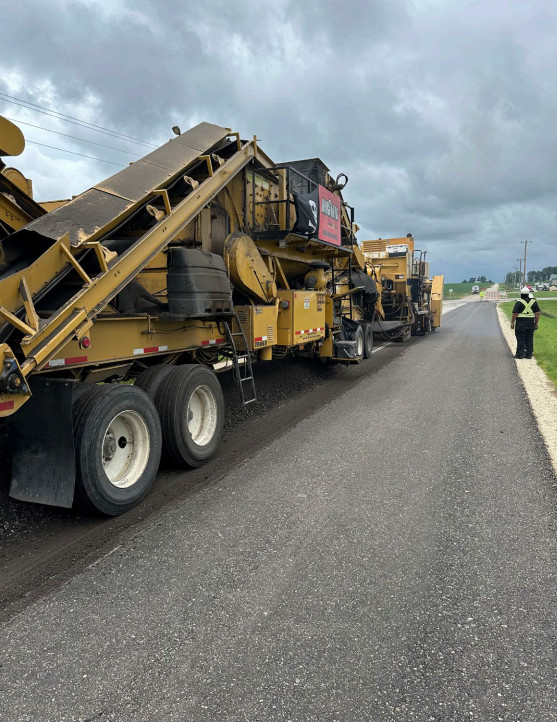
Before-and-after: Fayette County, Iowa, roadway before and after reconstruction using SoyLei’s soybean oil-based asphalt rejuvenator. Photos courtesy of Fayette County.
“Moving an innovative product from research into commercial construction is a significant challenge, but SoyLei’s technology showed the promise to meet the performance, constructability and quality standards we look for,” said Fantz. “The quality has been excellent, and these projects appear to be some of the best hot mix asphalt roads we’ve ever constructed in Fayette County. The application was also cost competitive, and the resulting specifications can serve as a template for future projects.”
“This recognition from the American Association of State Highway and Transportation Officials as well as praise from county engineers demonstrates that soy biobased innovation can meet the performance expectations of today’s transportation industry.” said farmer-leader Robb Ewoldt, a soybean farmer from Iowa. “Creating new uses like this grows demand for U.S. soy as well as meet the needs of local communities and farmers who depend on good roads.”